
Cloud Computing
Ashinika Nethmini Bandara | Undergraduate | Wayamba University of Sri Lanka
What is Cloud Computing?
According to the National Institute of Standards and Technology, ‘Cloud Computing is a model for enabling ubiquitous, convenient, on-demand network access to a shared pool of configurable computing resources that can be rapidly provisioned and released with minimum management effort or service provider interaction’.
Simply, Cloud Computing is the delivery of technology services including compute, storage, databases, networks, software, and many more over the internet. Anyone can rent access to these services from a cloud service provider rather than owning their own computing infrastructure or data centers. The best examples for cloud service providers are Google cloud, Microsoft Azure, Amazon Web Service.
Characteristics of Cloud Computing

- Virtualization
This is the fundamental technology that powers cloud computing. Virtualization means splitting a physical server into several virtual servers, each running its own independent OS. This allows efficient use of physical resources available and also condenses the physical layer from the virtualized machine making it more mobile and easier to manage in a cloud environment. Through this it maximizes the output of individual servers reducing the need for physical machines, allowing cloud providers to operate on economies of scale.
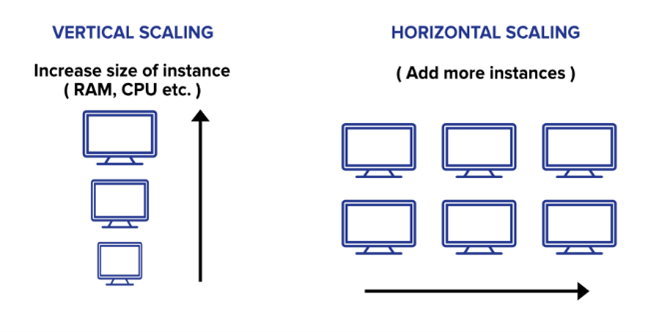
- Scalability
In Cloud Computing the users can add and remove resources as per the need.
Cloud computing in different fields
This concept is used widely around the world in different industries and fields, such as healthcare, education, agriculture, governmental services, business and etc. Let’s have a look at the most critical two fields during the COVID-19 pandemic.

- Healthcare Sector
During the past three years, CC in healthcare has been started to grow rapidly due to the prevailing pandemic. According to the Technavio market research report, the global healthcare cloud computing market will reach $25.54B during 2020-2024. The finding of the Enterprise Cloud Index Report by Nutanix claim that 46% of respondents have increased their hybrid investments as a direct result of the pandemic. Some people have upped their investments as a direct result of the pandemic. Some people have upped their investment in public cloud services, while some have invested more in private cloud despite all the advantages and disadvantages of CC in healthcare.
| Advantages | Disadvantages | ||
|---|---|---|---|
|
1. |
Having easy access to medical data and ability to collaborate on it |
1. |
Cloud is a shared responsibility between user and the cloud provider. Therefore, the user has to trust an external party to keep the data secure. As this sector deals with a lot of sensitive data trusting a cloud service is challenging |
|
2. |
Better customer services |
|
|
|
3. |
With cloud it has access to data on intelligent technologies like AI, ML, and data sciences where data can be analyzed and derive valuable insights |
|
|
|
4. |
Possibility to collect data from patients on different treatment plans and analyze it for trends and patterns to find those with the highest rates of success |
|
|
|
5. |
Cost-Effective |
|
|

- Education sector
Due to the pandemic outbreak all around the world, the mode of delivering education has been virtualized to a greater extent. To meet the existing challenges due to COVID-19, educational institutes become more efficient in virtual delivery of quality teaching services. Here, cloud computing provides a great platform for educators to improve their teaching practices. Cloud computing presents an ideal opportunity as it not only saves costs but also power, due to the simultaneous usage of infrastructure by several organizations for the purposes of teaching, learning, research and etc.